2. April 2026
Bitcoin Mining: Is It Still Worth Mining Cryptocurrencies? The Reality of 2026
Just a few years ago, it was possible to come across stories of people who started mining Bitcoin at home and made a fortune within a few years. Today, the situation is very different. Bitcoin mining has transformed into a global industry dominated by massive data centers, cheap electricity, and specialized hardware. The question of whether it is still worth mining cryptocurrencies now has a much more complex answer than before.
International analyses agree on one thing – Bitcoin mining can still be profitable, but only under certain conditions. For ordinary investors or individuals without access to cheap energy and modern equipment, it is often more worthwhile to buy Bitcoin than to mine it.
How Bitcoin Mining Actually Works
Bitcoin operates on the principle of a decentralized network, where transactions are verified by so-called miners. They use the computational power of their devices to solve complex mathematical problems. Whoever solves the problem first adds a new block to the blockchain and receives a reward in the form of newly created bitcoins and transaction fees.
This reward is the main motivation for miners. However, its amount gradually decreases. In April 2024, another so-called halving took place, reducing the block reward from 6.25 BTC to 3.125 BTC. This mechanism is part of Bitcoin’s economic model and ensures its limited supply.
Lower rewards, however, also mean greater pressure on mining efficiency.
Electricity Determines Profitability
One of the most important factors determining mining profitability is the price of electricity. Energy costs make up the majority of miners’ expenses, often accounting for 70 to 80 percent of total operating costs.
For this reason, large mining companies often relocate to regions with cheap energy – such as certain parts of the United States, Canada, Iceland, or Kazakhstan. Cheap electricity from renewable sources or excess energy from power grids can significantly impact return on investment.
An analysis by Coincub states that mining typically becomes profitable only when electricity costs are around $0.06 to $0.07 per kilowatt-hour or lower. For many households in Europe, electricity prices are several times higher.
Mining Has Become an Industry
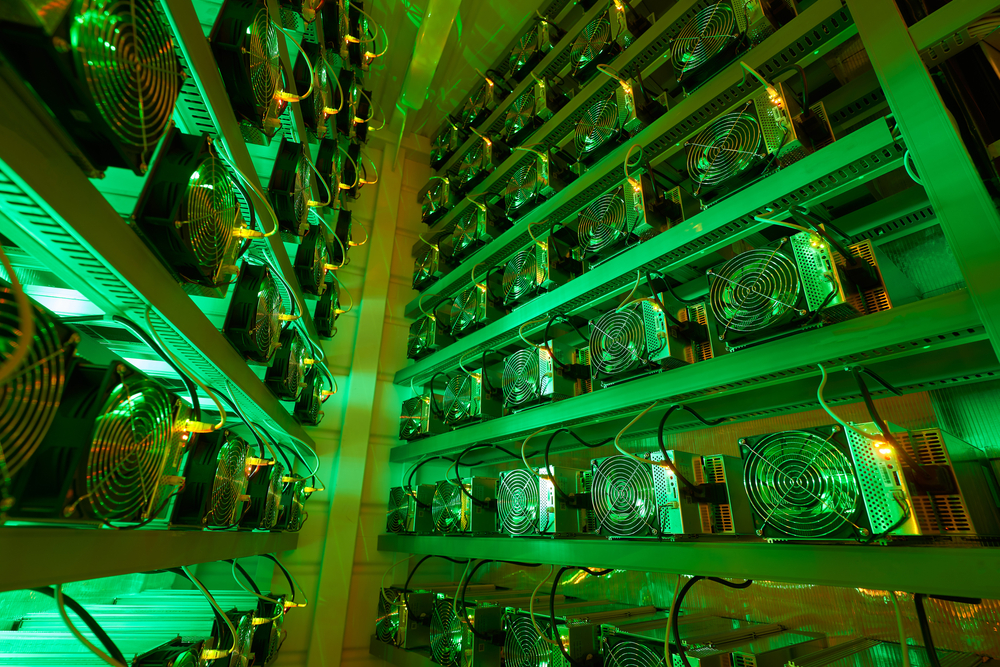
Another key factor is technological development. While it was once possible to mine Bitcoin on a regular computer, today the field is dominated by specialized devices known as ASIC miners.
These machines are designed specifically for cryptocurrency mining and can perform enormous amounts of calculations per second. However, they are expensive and quickly become outdated. Modern mining farms often invest millions of dollars in infrastructure, cooling, and energy systems.
According to an analysis by Investopedia, this industrialization is one of the main reasons why mining has shifted from individuals to large companies.
Strategies of Large Miners
Large mining operators are constantly looking for ways to further reduce costs. Some companies, for example, use waste heat from mining to heat buildings or greenhouses. Others move mining
farms to areas with surplus renewable energy.
The mining industry is gradually evolving into a highly optimized technological sector that combines energy, data centers, and financial markets.
For smaller miners, however, the return on investment can be highly uncertain. Profitability depends on several variables that change over time. The key factors include the current price of Bitcoin, network mining difficulty, hardware costs, and electricity prices. It is precisely the combination of these elements that determines whether mining is profitable or quickly becomes a loss-making venture.
For example, if the price of Bitcoin rises significantly, mining can become profitable even for smaller players. In the opposite scenario, however, a drop in price or an increase in mining difficulty can quickly eliminate profitability.
Is Mining Still Worth It?
The short answer is: yes, but only under certain conditions.
If a miner has access to very cheap electricity, modern hardware, and can optimize operations, mining can still be an attractive business. This is why large-scale mining farms continue to emerge, operating similarly to data centers.
For ordinary investors, however, mining often does not make economic sense. The costs of hardware and energy can exceed potential returns, especially in regions with expensive electricity.
As a result, many analysts suggest that for most people, a simpler strategy is to buy Bitcoin and hold it as a long-term investment.
More articles